Category: Consumer Behaviour

  • The Human-in-the-Loop Paradox

    The Human-in-the-Loop Paradox

    The Human-in-the-Loop Paradox

    Why I think the industry is betting on the wrong long-term architecture for AI.

    TL;DR

    For the last two years, “Human in the Loop” (HITL) has become the default answer to almost every AI safety question.

    I think it’s the wrong end state.

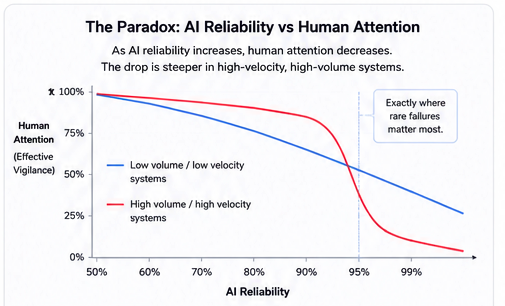
    In fact, I believe the effectiveness of human oversight is inversely proportional to the reliability of the AI it supervises.

    As AI becomes better, humans don’t become better reviewers. They become worse ones. Not because they are lazy. Not because they lack discipline. But because that’s how human attention works.

    And The future architecture won’t be: AI → Human Reviewer

    It will increasingly become: Maker Agent → Checker Agent → Human-on-Exception

    Or what I’d call Human-off-the-Loop (HOTL)* — humans who don’t continuously supervise execution, but intervene only when independent systems disagree or encounter something genuinely novel. I didn’t arrive at this conclusion by reading research papers. (Though I did read some summaries). I arrived at it by zooming out of my own behaviour with AI-written-code.


    I stopped reading code.

    I’ve been using Claude and Cursor to write code for the last eight or nine months.

    Like almost everyone who’s used these tools seriously, my development velocity has gone through the roof. Something that earlier took me two weekend sessions of four hours each now gets built in under five minutes.

    This is how my current path looks:

    • I imagine a feature.
    • Debate the approach with Claude, Gemini, ChatGPT.
    • Write a BRD.md. Read and refine it.
    • Work through architecture. Write a tech_architecture.md.
    • Think through the database schema. Add it to the above.
    • Break it down into a smaller module or feature and map it to a build_next.md.
    • Ask Cursor to build it.
    • Five minutes later it’s done.

    Sometimes I don’t even have time to get myself a coffee before it’s asking whether I want to review the changes. And I love the elegant code it churns out.

    But over time, I stopped reviewing the code. Completely. Not intentionally. Not overnight.

    It happened gradually enough that I didn’t notice it, until one day I realised I hadn’t actually read a diff in weeks.

    • Cursor would generate code.
    • Generate and run the tests.
    • Rework the code if needed.
    • I’d get Claude to review the code against the same build documents.
    • It would identify and fix failures, and show me what it felt was a miss and why.
    • I’d review those and give my consent to the proposed changes.

    Somewhere along the way, reviewing code stopped feeling useful. I had to read too much only to find that Cursor and Claude had already thought through edge cases better than I would have as a novice.

    It started feeling like validating a calculator.

    Every once in a while I’d scroll through the code. It looked beautiful — nice comments, well-structured functions and classes.

    But I wasn’t really reviewing it.

    So I asked myself: was I becoming lazy? Or was I cognitively overwhelmed by the sheer velocity of my AI coding companion?

    Was it my lack of discipline ?

    My first explanation was that this was laziness — refusing to be excited about reviewing code.

    Was it that I felt more energised writing (creating) than reviewing (testing)?

    Maybe I just needed more discipline. Block thirty minutes every evening and force myself to review every generated line. Or maybe I just needed a stronger coffee.

    The more I thought about it, the less convinced I became. Because nothing else in my behaviour had changed. I still cared deeply about my coding projects. I still spent hours on architecture decisions, still documented, revisited, and challenged product assumptions.

    The only thing I had stopped doing was manually inspecting code that had become consistently excellent. Because of the high quality, volume, and velocity of what was being generated — I simply couldn’t keep up.

    That made me wonder whether this wasn’t a Wribhu problem. Maybe it was a human problem.

    So I started reading up on it.

    Turns out we’ve seen this movie before.

    Long before AI coding agents existed, researchers studying aircraft autopilots, industrial control systems, and medical decision-support tools had already documented a remarkably similar phenomenon.

    The names that kept coming up: Christopher Wickens, Raja Parasuraman, Dietrich Manzey.

    Their conclusion, summarised simply:

    • Humans stop actively monitoring systems that have repeatedly proven themselves reliable.
    • And more importantly: training doesn’t eliminate this tendency.

    That last line changed how I thought about my own behaviour. I had assumed my declining vigilance was a personal failing. Decades of research suggested it was a predictable consequence of interacting with highly reliable automation.

    In one study, researchers examined what happens when an automated system makes its first significant mistake after a long streak of correct decisions. Intuitively, you’d think that’s exactly when the human reviewer catches it.

    The opposite happens. The streak of correctness is what causes humans to reduce their attention.

    • The automation earns trust.
    • The trust reduces scrutiny.
    • And scrutiny is lowest precisely when it matters most.

    I read that a few times. Because it perfectly described what had happened to me with Cursor and Claude. No one told me to stop reviewing code. The AI simply got good enough that my brain quietly concluded my attention was better spent elsewhere.

    My hypothesis around HITL

    I think we’ve got Human-in-the-Loop backwards.

    Most discussions assume that adding a human reviewer permanently improves system safety. I think that’s only true while the AI is unreliable enough to keep the human engaged — or while volume and velocity are low, or the system is newly implemented.

    Beyond a certain threshold, every improvement in AI reliability reduces the amount of genuine human oversight. Not morally. Cognitively.

    At 60% accuracy, the human checks everything. At 80%, they skim. At 95%, they spot-check. At 99%, they click Approve.

    The human never leaves the workflow. But meaningful review quietly disappears.

    That’s the Human-in-the-Loop Paradox.

    The effectiveness of human oversight is inversely proportional to the reliability of the AI it supervises.

    I don’t have empirical proof of the exact shape of this curve yet — that’s the part I’d genuinely love someone to go test. But the direction of the effect isn’t really in question; it’s the same complacency curve Wickens and Parasuraman documented decades ago, just compressed into a much faster feedback loop.

    As AI reliability improves, its contribution to system quality keeps increasing. Human contribution doesn’t — it peaks, then declines, eventually approaching zero, because the human stopped allocating meaningful attention.

    This isn’t unique to coding — coding is just the first domain where millions of us are living through it in real time, fast enough to notice. A radiologist who’s seen the AI right on 50,000 scans in a row isn’t inspecting scan 50,001 with the same intensity as the first. Someone clearing ten thousand fraud alerts or AI-drafted customer emails before lunch isn’t either. The human brain isn’t built to maintain perfect vigilance over streams of mostly-correct output, and the higher the throughput, the faster that vigilance erodes.

    Volume and velocity also change the shape of the decline, not just its existence. If you’re reviewing ten mergers a year, you’ll likely stay engaged — the decline is gentle. If you’re reviewing ten thousand AI-generated items before lunch, it isn’t gentle, it’s a cliff. Which means the right question isn’t “should there be a human in the loop?” It’s “can a human meaningfully stay engaged at the scale this system actually operates?” Those are very different questions, and the architecture that works for a surgeon won’t work for a claims processor or a coding assistant.

    Today, almost every AI workflow is still built around the same loop: generate, hand to human, approve, repeat. If the paradox is real, we’re spending enormous amounts of expensive human attention reviewing outputs that are almost certainly correct — the equivalent of employing thousands of accountants to manually re-verify that calculators still know two plus two is four. Eventually the accountants stop checking. The calculators don’t. Architecture should reflect that, instead of pretending it won’t happen if we just write a stricter review policy.


    Agent-Agent<>Human – HOTL

    WWithout consciously planning it, my own workflow has already evolved:

    • Cursor writes code.
    • Claude reviews it, runs tests, and challenges assumptions.
    • Claude sometimes points out edge cases Cursor missed.
    • Sometimes Claude finds something genuinely important.
    • Sometimes it says Cursor could simplify an implementation.
    • Sometimes it admits Cursor found a better solution than it had initially considered.
    • So I don’t spend my energy reading every generated line of code.
    • I spend my time reading disagreements — the disconnects between Cursor and Claude.

    (Yes, I deliberately don’t use Anthropic models inside Cursor — I want two genuinely independent perspectives, not the same model checking its own work.)

    The actionable area for me was never the code itself. It’s the disconnect between two different models. That’s where my attention has maximum leverage — and I suspect that’s true far beyond software.

    This reframes the human’s job entirely. We’ve defaulted to treating humans as checkers — someone who looks at every transaction. I think the better role is judge — someone who intervenes only when something is contested. A recent systematic review of human-in-the-loop AI design names the failure mode of the checker model directly: humans nominally “in the loop” mainly to absorb accountability when something goes wrong, not to provide real oversight — present, but not actually engaged. That’s the checker model at scale. The judge model sidesteps it structurally: judges don’t need to scale linearly with output volume. They scale with disagreement. And disagreement is a far smaller number than output.

    That distinction — checker vs. judge — is the architectural shift I think eventually wins, with the obvious caveat that the maker and checker agents need to be genuinely independent (different models, different biases), or you’ve just built an elaborate way to rubber-stamp yourself.


    Human-off-the-Loop (HOTL*)

    This is where I think the next design pattern emerges.

    The name is slightly provocative, but the idea isn’t. Humans don’t disappear. They’re repositioned from checkers to judges.

    Instead of continuously supervising execution, they intervene when:

    • two independent agents disagree,
    • confidence drops below a threshold,
    • an anomaly is detected,
    • or the system encounters something it hasn’t seen before.

    The human isn’t reading every line. The human is resolving ambiguity. Every judgement becomes a learning signal back to both agents — the maker improves, the checker improves, the disagreement rate falls, and human effort naturally decreases over time.

    Ironically, the system gets safer precisely because the human is involved less often, but with far greater focus when they are.


    The architecture I think we’re heading toward

    For most of history, knowledge work looked like this: one human creates, another human reviews.

    AI first replaced the creator: AI creates, human reviews. I think that’s just an intermediate state.

    The long-term architecture is more likely to be: one agent creates, a second independent agent challenges it, and only unresolved disagreements reach a human. The human adjudicates. That judgement improves both systems. The cycle repeats.

    That’s a fundamentally different way of thinking about AI governance than “human reviews every output.”


    My prediction: HOTL, not HITL, becomes the steady state

    Within five years, the dominant enterprise AI architecture will not have humans rWithin five years, I don’t think the dominant enterprise AI architecture will have humans reviewing every output. Humans will review disagreements, low-confidence cases, and exceptions.

    The winning systems won’t be the ones with a human checking every output. They’ll be the ones where one machine continuously challenges another, and human judgement is reserved for exactly the moments it adds disproportionate value.

    There will always be domains where law, ethics, or regulation require human approval regardless of behavioural realities — I’m not arguing humans disappear. I’m arguing that continuous review becomes behaviourally ineffective at scale, whether or not the policy keeps requiring it.

    Which brings me to the line I’d genuinely like to debate:

    Humans should not scale with AI output volume. They should scale with AI disagreement volume.

    The question isn’t whether humans should stay in the loop. It’s where human attention creates the most marginal value. I increasingly believe that answer is: at points of disagreement, not at points of execution.


    References:

    • Wickens, C. D., Clegg, B. A., Vieane, A. Z., & Sebok, A. L. (2015). Complacency and Automation Bias in the Use of Imperfect Automation. Human Factors. https://journals.sagepub.com/doi/10.1177/0018720815581940 Parasuraman, R., & Manzey, D. H. (2010). Complacency and bias in human use of automation: an attentional integration. Human Factors. https://pubmed.ncbi.nlm.nih.gov/21077562 Lazaros, K., Vrahatis, A. G., & Kotsiantis, S. (2026). Human-in-the-Loop Artificial Intelligence: A Systematic Review of Concepts, Methods, and Applications. Entropy. https://www.mdpi.com/1099-4300/28/4/377 — source of the “checker present but not actually overseeing” pattern referenced above.

    – Wribhu

    PS: Would love to hear your pushback on this.

    PPS: Images and part of the post, was created by AI with Human-very-much-in-the-loop !!

  • The Present Future of Audio: Talk, Music, Video, Interactivity – a16z Podcast

    The Present Future of Audio: Talk, Music, Video, Interactivity – a16z Podcast

    a16z podcast has had two very interesting episodes on the past, present and future of audio. This episode goes deeper into understanding the trends, why audio as a content format looks promising and some great insights into Spotify’s journey of launching podcasts within the same app.

    Here are my notes/summary of the episode.

    Understanding Audio Vs Video TRENDS

    • Background vs foreground audio – E.g. music may be a background audio (music) or the main element (eg podcast). Video usually does not have such a concept
    • Active vs passive mode of content consumption – mode based framework to understand how audio or video is consumed
    • Audio is massively untapped – precisely because it can have both foreground/background or active/passive consumption. Unlike video which is mostly active consumption.
    • What all is audio – music, talk, podcast – multiple formats exist and new ones will emerge
    • Learn from the video evolution – Video is like a cheatsheet for what may happen/needs to happen in audio
    Present Future of Audio Podcasts

    Understanding AUDIO Trends

    • Uniqueify – A new term that the guest used to refer to what Tiktok did. If you just heard the Tiktok videos you wouldnt get it You have to look at the video to understand the uniqueness that the creator brought to it. This zone where the consumers start using the standard music/video and add their own uniqueness to it, opens up a whole new world of opportunities.
    • Tiktok is consumed one video at a time (? don’t know, never been on Tiktok). This is super helpful for the machine learning algos. Unlike a feed which has multiple posts that you as a consumer is exposed to simultaneously, Titktok product team knows exactly what you saw, for how long. What you skipped etc. The AI learns faster. Audio learns same.
    • Skipping and fast forwarding is a reality. Consumers tend to skip tracks in a playlist. If the first few seconds don’t sound exciting, they are on to the next one. Music creators have noticed this and its influencing what they create e.g. Songs used to start slow, would build up gradually. Not so much now.
    • Role of hardware – with airpods, home speakers there is a clear increase in the consumption of audio.
      • More consumer journeys (I listen to podcasts during evening walks) and content formats (audio books) are evolving.
      • Hardware is a strong signal. What situation are you in. Different jobs to be dine. It is used as a proxy to understand which job is expected. E.g. when the music (from the phone) is played on the car speakers, it is very different context from music on a home speaker. Spotify uses this signal to predict what you may expect from the app
      • Phone vs speakers. Phones are inherently more interactive. But the audio based interaction has opened up a new set of possibilities.
      • UI (interaction) and content – those are the two aspects of hardware signal that Spotify considers important
    • Impact of Covid – e.g. the Daily drive on Spotify was for the daily commute. With WFH that’s gone, how do we identify a different set of content for a similar regular consumption.
    • China leading the audio trend . Engaging with fans. Supporting a creator economy.
    • Audio creators will grow exponentially in future
    • Return on Discovery – what is the value a consumer derives from spending time in the discovery mode.

    Why and how Spotify included Podcasts in the same app

    • Trade-off was between a clean-podcast-only-app with zero starting distribution vs existing app with phenomenal scale available on day zero
    • Data showed that music listening was significantly predictive of the podcast taste of consumers.
    • Build a super-app. Build something that serves that segment of consumers really well. Goes deeper into their requirements. E.g. podcast creators are hugely under-served. While multiple options exist, any platform that be the super-app for podcast creators has a good chance to scale (my assumption)
    • Steve Jobs( We know what is needed) vs Jeff Bezos (let’s see what sticks) approach to building podcasts. Spotify has an approach of Distributing decisions (find more) . Opinionated decisions. Run Experiments.
    • Build for one person. Different mindsets
    • Challenges around allowing different interactions within the same app e.g. users skip to next track in a playlist and jump 15 or 30 seconds in a podcast. One interaction, two different results depending on the context.
    • A new format of music+podcasting being launched where talk is interspersed with licensed music. Works well for both the music and the podcast creator. And it seems consumers were always used to this format, thanks to the radio.
    • Finding Signals – With 3 min songs and high levels of skip, music picks up signals (on consumers taste) very fast. Podcast is slow. really slow and will need other types of signals. E.g. hosts, guests, topics – what is the user really interested in.

    Product and strategy lessons from Spotify

    • Algotorial – Discovery of content via a combinattion of editors and algos. The guest takes a great example of Songs to sing on a drive. A machine does not understand this. An editor, a human can. So the way Spotify built such lists was to get the editor to select 1000 such songs and then let the ML take over to find and recommend other such songs. Algo based scaling. Human powered data-wireframe.
    • Mood graph – Mood is one of the biggest vectors for the billion+ playlists on Spotify. People club and consumer music by their moods. (mood based advertising has been around for a while)
    • Fault tolerance is very different in discovery vs consumption modes. A user who is just browsing may be ok to find a good song after n skips. Not so much when she just needs the music. Hence finding which mode the user is in is critical. Also ML training is limited to the discovery mode sessions.
    • Product Management needs contrarian hypotheses. While ML looks at past data to predict a straight line ahead into the future. Any innovative company will continue to take contrarian views and run tests
    • Prioritization is critical. But needs to happen top down. At Spotify, the top bets are decided and rank ordered by Daniel. The logic is simple. In any big company, the CEO cannot keep track of clashes. But whenever there is a clash of projects, everyone knows which one is more important.
    • Subscription is a very strong signal. The customer is voting with their wallet. Much powerful signal than likes, comments etc.

    Go to the episode but before that, what’s your take on the future of podcasting?


    These are my notes of interesting Podcasts. The inferences I have drawn may not be what the host/show/guest intended for. So beware.

  • Masters of Search in the streaming era

    Masters of Search in the streaming era

    Search Experience on Netflix, Amazon Prime and You Tube

    Across both audio and video formats, the online media consumption in our generation is higher than ever before.

    This growing consumption by an ever increasing base of consumers will also mean varied consumer journeys – i.e. how the content gets discovered and consumed may have multiple paths.

    I believe SEARCH plays a critical role in enabling many of these consumer journeys.

    Yet, many of the leading players have a highly sub-optimal search.

    Let me start with a few examples. (NOTE: these are mobile-app-experiences, the on-TV-experience may vary)

    1. I heard this song – Chal chalen apne ghar (don’t ask me why this song? I loved it until I saw it. ) – on the radio while driving. As soon as I reached home, opened up Amazon Music (if you are asking why Amazon Music? wait for the later sections) to search for it. And I just couldn’t find it. Whereas on YouTube, it came up instantly and under multiple spelling combos (critical for non-English language content)

    2. I have been learning Spanish on Duolingo lately. And just wanted to have fun and watch a Spanish movie without subtitles.

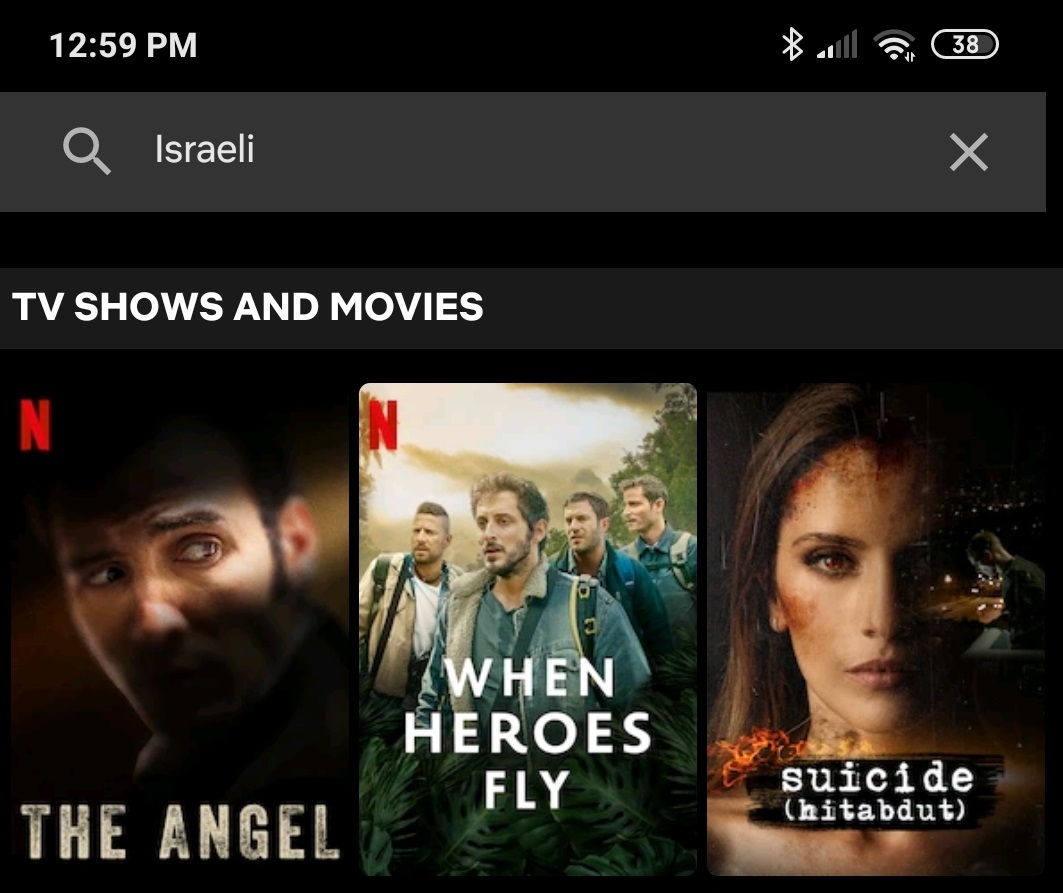
    I had similarly stumbled upon Fauda – an Israeli series that I really liked. And went looking for other Israeli series and movies across both Netflix and Amazon Prime. The Netflix search popped up the kinda results I was looking for, while those on Prime.. well.. have a look for yourself.

    3. Searching for Ben Affleck movies. This one is interesting. While one can put the phrase “Ben Affleck Movies” in the app and see a list (don’t miss the 4th row in Netflix), its interesting how the cast section is leveraged across Prime and Netflix. Prime links it to a separate IMDB powered trivia section on the star, but no quick way to list ALL the Ben Affleck movies on Prime. Wouldn’t it be cool to just click on any of the cast or crew and see all their movies immediately.

    You get the picture, right?

    It got me thinking, these are big companies with millions of dollars in revenue and having the best technology and product talent, why then is the search experience sub-par?

    There are a few hypotheses I could come up with.

    Possible search/indexing challenges:

    • User-generated-uploaded-content vs original/copyright content – One big advantage YouTube has that the same song (as in the example above) is uploaded by thousands of users, each giving it their own vernacular spelling etc. This creates a rapid directory of possible variations all leading to the same underlying song. On the other hand, on Amazon Music there is just one instance of this song – the original version that is available. If the cataloging team failed to populate variations, search will always be failing on those cases. And there is clearly a tradeoff – while the chances of discovery are high on YouTube, the quality may not match that on Amazon Music or other such services.
    • Vernacular content – The search challenge becomes enhanced with vernacular content, because you are typing a non-English word in English – something that is prone to variations. Should I write it as Chalen or Chalein? So what’s the best solution? Start prompting possible matches as early as possible. But that’s easier said that done. Requires a very robust mapping of such variations and a link back to the content directory
    • Understanding the search context – Ben Affleck has been an actor, producer, director and even a writer. So when one is searching for “Ben Affleck movies” what are we really looking for? Maybe the best option is to ask the user in such instances or show all results – with tags – actor, writer, producer,director etc
    • What all are we indexing – while the above point is about understanding the consumer’s context during search, it is equally critical to decide what is powering the search. E.g. if a movie’s story has a Mossad character, does it qualify to come under “Israeli movies”. I guess we can argue it both ways.
    • Maybe it’s deliberate – It could be that the platforms have been intentionally designed to build suggestions as the primary driver for discovery. By the time I had seen my 3rd Israeli movie/series, my feed had a whole list of similar recommendations.

    Search is not a boundary case, but…

    Mapped a few dominant journeys for content discovery (as shown below) and few aspects become clearer

    A few Consumer Journeys in content discovery
    • Search is NOT an edge case. But it is hard, especially in a non-UGC environment with vernacular content
    • It is super easy to implement the recommendation workflow. It carries a deep link and is highly scalable
    • Algos are scalable and provide a more reliable path towards solving for the key metric – # of hours watched on the platform. The algo recommendations can uncover titles that the user may never knew existed and hence would have never uncovered during the search-powered flow.

    Maybe that’s why there is so much focus on optimizing the recommendation engine. The web is full of articles decoding the Spotify recommendation engine.

    I am pretty sure that once the platforms hit an algo-powered-plateau of discovery and views , someone would decide to double down on solving for search.

    Until then, let the bot and friend recommendations keep flowing.

  • Understanding the power of gamification

    Understanding the power of gamification

    For the last 2 weeks, I have been learning Spanish on Duolingo. It’s amazing.

    The Duolingo app is just phenomenally well designed for helping one go deeper into the world of a new language – one chapter/session at a time.

    Thanks to its regular in-between-session nudges I have been super regular. Built a 13 days streak.

    Last week, I got a notification that I was in the Top 10 of the Silver League ! If I could retain the top 10 position by Sunday, I would progress to the next League – The Gold League.

    And, guess what – I spent more time than usual going through the chapters and exercises. Collecting more points, just to ensure that I entered the Gold League. Which I did !


    This got me thinking. What motivated my behavior to strive for this League membership?

    I had no clue, what the Silver or the Gold League is? It’s just a leader-board in the app.

    Is it across all learners, in which case its HUGE. Or is it for just Spanish learners? Or is it across a small cohort – algo picked to get all of us to do little more.

    There wasn’t even any prize or any thing.

    Whatever it is, the leaderboard got me motivated enough to invest more time in my Spanish lessons. I learnt faster. Got better. Got into the Gold League. And a bigger fan of Duolingo !

    Its basic gamification man !! – you must be thinking.

    As I asked myself why did Duolingo really succeed (Even this article from Wharton talks about Duolingo as a successful example of gamification done right), I realized how little I knew of what causes our behaviors to be influenced by game dynamics.

    And hence I decided to uncover what drives Gamification .

    Interestingly, last week itself I was listening to the Masters of Scale podcast featuring Ahn (Duolingo & Captca & reCaptcha founder). The two geeked out on how gamers influence product management.

    Reid and Ahn discuss gamers product management

    The Gamified Concoction

    How we feel and what emotional decisions we make, are all governed by a few chemicals.

    Research indicates that

    • Dopamine (the feel-good hormone) gets released when we are rewarded.
    • Badges and leader-boards may trigger Serotonin (drives will power and delayed gratification) – by remembering past successes
    • Endorphins get triggered by the thrill and excitement of playing a game

    According to the Self-determination theory, there are three different underlying human needs

    • Need for competence
    • Need for self-autonomy
    • Need for social-relatedness

    But like a good mock-tail, it works only when mixed well. Most businesses struggle to deploy game mechanics into their products and offerings

    Why do so few businesses succeed at Gamification?

    Finding the right user at the right time.

    E.g. Leaderboards are considered as effective motivators, if there are only a few points left to the next level or position, but as demotivators, if players find themselves at the bottom end of the leaderboard. Competition caused by leaderboards can create social pressure to increase the player’s level of engagement, and can consequently have a constructive effect on participation and learning [Source: ScienceDirect]

    This seems to be bang on – I could see how another 10 mins daily could keep me in the league. The Duolingo app never mentioned the leaderboard until I was almost there.

    Choosing the right tools.

    Whether it is leaderboards (competing with others) or performance graphs (improving on your past self) or avatars or meaningful stories (articulating the narrative for the user), choosing the right tool set makes a huge difference.

    E.g. Insight Timer – a meditation/wellness app – has a subtle nudge to help one maintain-the-streak and build-the-habit.

    Insight timer milestones
    Insight timer milestones

    It’s more than just reward points.

    “The biggest pitfall in using gamification is thinking that all you have to do is drop in some game elements. [For example, saying], “We will give people points for something , and they will get really excited just because the points are there.” – Kevin Werbach and Dan Hunter authors of The Gamification Toolkit.

    Banks have long believed in the power of their reward-programs to steer consumers away. As bankers we obsess over the earn and the burn rates of various competing products in the market. But do our customers really care?

    Google Pay brought in an interesting twist to the cash-back fever that ruled India, with its seemingly simple scratch-card-like experience. That one simple insight (of riding on an existing gamified experience) has changed the way cash-back was communicated in the industry now.

    Google Pay Gamification

    More about Gamification

  • Behavior Elasticity > Demand Elasticity. A quick Coffee Poll

    Behavior Elasticity > Demand Elasticity. A quick Coffee Poll

    Are you someone who used to drink a coffee (or two) everyday at the barista next to your office? If, yes spare a quick minute to tell us how WFH during COVID has impacted your coffee+work association.

    [poll id=”2″]

    [poll id=”3″]

    Read below on why this quick poll….

    Behavior elasticity - coffee poll

    Let me explain why this quick poll.

    There’s a lot of talk about how COVID and the resulting lockdown has resulted in a compression of demand and supply across sectors and across categories.

    In most of the articles i read and discussions I am part of , people talk about how demand for most non-essential items will take a long time to pick up and reach the old levels.

    No arguments there.

    But I think for most non-essential spends, we need to ask what is the elasticity of behavior.

    What is behavior elasticity?

    I am defining this as the # of days it takes consumers to get back to the old patterns of spending.

    Yes, it will vary by the spend-category . Essential and non-essential spends will have very different elasticities.

    Hence I have chosen coffee for this poll.

    Why Coffee for this poll ?

    Few reasons:

    • For many like me, coffee is an essential spend 🙂
    • Its reasonably addictive to nudge consumers to find alternates – espresso machines, other brews etc
    • For years, marketing dollars were spent to leverage the power of association. For regular coffee drinkers, work/productivity may have a strong association with coffee. Is this association broken down easily
    • Lockdown has been in effect for long enough to build new habits .

    So the key question is – once offices open, will coffee drinkers be behaving as earlier?

    If yes, how soon?

    I think demand elasticity (not in the traditional price based elasticity) will follow behavior elasticity. And could be a big component of how fast demand recovers.

    E.g. I think for the coffee shops, there may be loss in business due to

    • People losing jobs – say 10-15%
    • People working from homes post opening of lockdown – another 10%
    • People who will be at work but don’t buy coffee anymore – This could be the make or break – hence the poll.

    What do you think?

  • Quest for Friction Less Experiences

    Quest for Friction Less Experiences

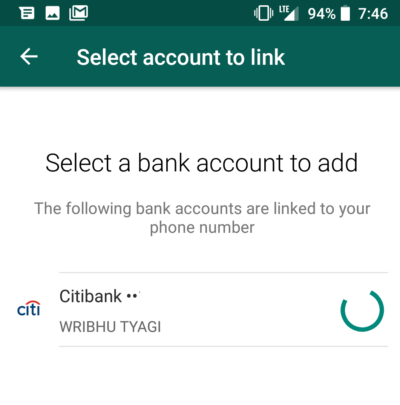
    Yesterday, I got to experience the WhatsApp payment flows. It surely felt like a neat friction-less experience both for adding/mapping bank accounts and for in-chat payments.

    And in my excitement I forwarded it to a friend who didn’t have any UPI handle so far. And I was surprised by the reaction.

    How does WhatsApp know my bank account ??!! 
    Payment friction

    And frankly I had looked at it the other way round – they are showing me the specific account that I want to associate here.

    And this got me thinking about friction in digital consumer experiences.

    I remembered my Amazon experience.

    I have recently changed my laptop and phone and each time I logged into my Amazon account from a new device/browser I got a security challenge. I had to enter a security code that was sent on my email.

    Friction during logging in

    This is inspite of me authenticating myself using my Amazon credentials –  login id & password.

    So why the additional step?  Why add to the friction of logging in?


    • Its a friction-less way of doing XYZ !
    • We have drastically reduced the friction in each transaction
    • Our platform provides the most friction less experience for ABC

    Am sure like me, you keep hearing how every venture and corporate is focused on reducing friction and there by making it a significantly better experience for their consumers/stakeholders etc.

    And I get it.

    If I almost always use an offers platform to look for offers near me on a mobile app, it should not ask me to choose a city, then location etc – it should just pick my location and show me the offers. I get it.

    Similarly, if my online or in-app payment process need an OTP and there is a way to automatically read the OTP rather than needing me to toggle from the merchant app to the messaging app and back. It is definitely so much cooler and easier.

    BUT, ALL FRICTION IS NOT BAD

    What I don’t get is how suddenly friction has become such a bad thing.

    Way back in my school days, we were taught in Physics that while friction caused wear and tear, it also was the main reason wheels work – friction prevents slippage and aids rotation. Snow chains for tyres – aid driver confidence by increased traction (apart from helping break the top ice layer).

    My current thinking on friction less experiences is as follows:

    • All consumers are not same. What is a great experience for some may be a concern for others (elevators vs escalators) . Hence it may be best to have varying levels of friction available for consumers.
    • Friction can help build consumer confidence – esp amongst users concerned about security
    • It may be useful in the on-boarding or early days of consumer-product relationship. As confidence builds, some more steps can be reduced. Like this recent experience where my Credit Card limit enhancement was pitched and delivered at the optimal moment.
    • Friction is also an industry level phenomenon. As an industry matures and consumer confidence builds, need for a faster, smoother way to do the same old task would become stronger.

    What do you think?

  • Cash is not the enemy – Stickiness of Cash Part 1

    Cash is not the enemy – Stickiness of Cash Part 1

    Why is cash so sticky in our society?

    Many of us have argued for the need to build convenience, security and ubiquity for digital payments. And then cash would start receding. No debate there.

    But we forget that as individuals our brains are wired to go back to cues that are triggered at the sub-conscious level. We are not always the rational individuals economists would have us to be. Our decisions are influenced more by emotions.

    CASH IS NOT THE ENEMY

    To appeal at the emotional level, we need either a villain or a hero.

    While bankers and payment professionals would disagree with me, but for most Indians cash is NOT the enemy. Consider this:

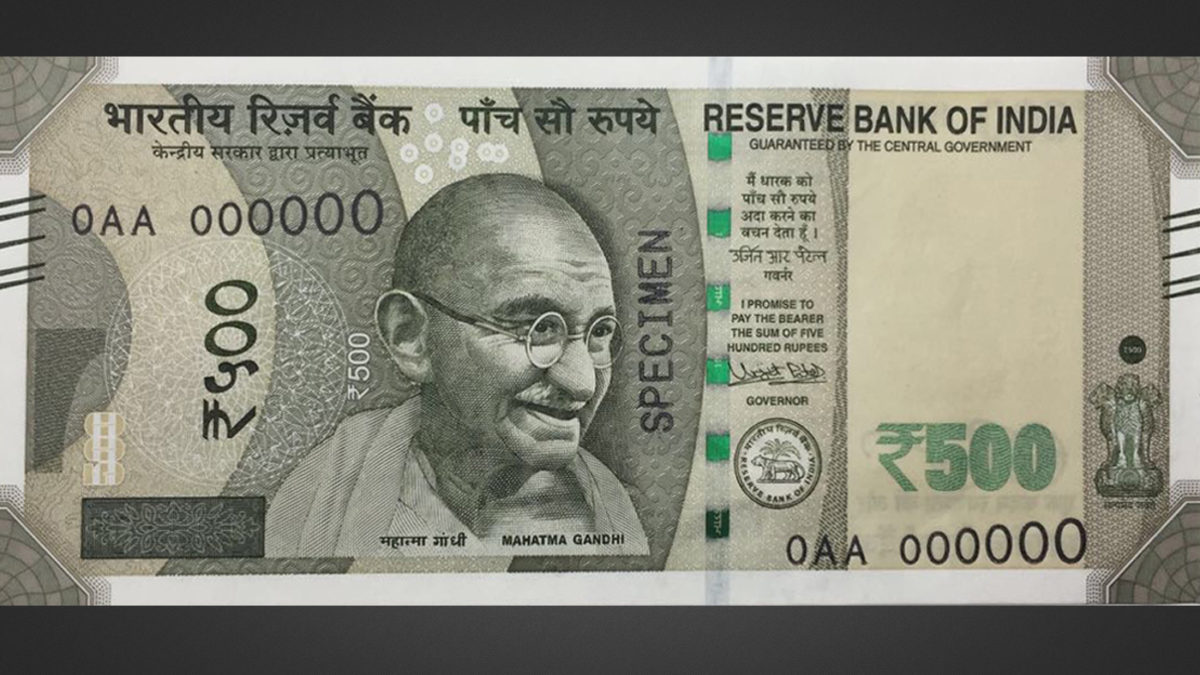
    • The currency carries images of Mahatma Gandhi, of the National Emblem and now of Mangalyaan etc. These are symbols of national pride. We are wired to feel proud to hold a piece of paper with these images on it.
    • We have traditionally celebrated an auspicious occasion with gifting loved ones with money. This association of gifting currency with happy moments is also tough to break anytime soon. Again deeply rooted positive connect.
    • When the Prime Minister announced the ban of old currency notes, the villain being chased was corruption. Not cash. So we never really took the storyline that cash is bad.

    I don’t think any country would even want to walk down the path of trying to build a negative connotation with its currency.

    Hence a story where cash is the villain may not work. We need something else to pitch Digital Payments at an emotional level.


    This is part 1 in a series of posts where I try to understand why Cash is sticky? What are the some of the obvious things, we may have overlooked in our zeal to digitize payments.

    Here’s part 2 , wherein I talk about why its a tough journey moving away from cash – too many choices and a hurdle-ridden on-boarding process.

  • Public policy, ripple effects and feedback loops

    Public policy, ripple effects and feedback loops

    I have always been intrigued by product design and by extension policy design (& implementation). If the government were to look at itself as a start-up technology venture, the policies, schemes and guidelines issued by the government would possibly be the “products” of this venture.

    And like any good product manager, one should study not just the immediate impact of change(s) in product design but also the delayed and maybe stickier changes in consumer behaviour.

    And that is what I want to share with you today.

    Shift in dietary habits due to Green Revolution

    Sometime last month, I was visiting an uncle of mine – someone who is in his mid 70s, reasonably fit, exercises regularly and has borderline diabetes. While we sat at the lunch table, I noticed that he had multiple other grains in his roti as against mine which was from just wheat atta. It seems most physicians recommend adding ragi, chana etc in your atta mix as a healthier alternative.

    And that’s how our conversation began.

    Wheat Green Revolution

    And what came out was quite surprising for me.

    It seems in their childhood days in villages of western U.P., wheat was not the staple grain. Infact it was considered a delicacy and wheat-chapattis were made when they had guests over. And he comes from a well-to-do farmer family. This was not because of economic constraints, it was just how things were.

    So as the elders started talking about this significant shift in probably the most important component in a typical North-Indian meal – roti – what emerged was that the shift was triggered by the Green Revolution in all probability.

    This lunch group which included scientists and government employees, agreed to the following sequence of events:

    • Wheat was one of the chosen candidates for green revolution . Though am very curious to find out why?
    • Government stepped in on the supply side with higher yield varieties, irrigation support etc
    • It also created artificial demand by setting up floor prices thus encouraging farmers to grow wheat. Making wheat a critical component of Public Distribution System also ensured a big buyer for wheat at these prices. This in turn ensured that a higher percentage of land under cultivation now got sowed with wheat
    • This brought the otherwise-considered-premium grain into the middle-class households at a very affordable price. Imagine if suddenly, you find yourself able to afford an item which for years or maybe generations was considered premium, chances are you will buy more of it to feel good (my assumption)
    • And they all started eating wheat more, skewing our diet heavily towards this singular grain in North India.
    • And the subsequent generation(s) like ours has come to believe that our rotis have always been a wheat-only product. Coz wheat rotis is what we ever saw.

    Am also very clear that India’s self-reliance on nutrition has been contributed heavily by progress on wheat and rice. So there’s no doubt that this has worked as planned.

    The fact that wheat may not be the healthiest grain is probably something new. Gluten intolerance was probably unheard of during the Green Revolution.

    But with the new facts before us, should the government re-evaluate its focus on just a handful of grains in its policies.

    What if, the support prices on wheat are relaxed a bit? What if other “healthier” grains are encouraged similarly? Will the cost of managing supply chains and warehousing for multiple grains offset the advantages of a wider-spread in our diet?

    Many questions and I don’t have any answers.

    Low availability of fodder for cattle

    Ask any elder who has seen standing wheat crop in the fields now-a-days vs in the old days. One thing they would tell you is that the wheat crop is now stunted. Its much much shorter.

    This am told, was probably one of the biggest breakthrough in developing High-Yield-Varieties. The nutrients and water is no longer “wasted” in the growth of the non-grain-yielding parts of the crop.

    But on the flip side – this has increased the cost of cattle-management for local farmers. Why?

    There just isn’t enough fresh fodder for the cattle. The non-grain part of the wheat crop was used as fresh and dried fodder for the cattle that the farmer had at home. This is gone.

    As my friend (who runs a dairy farm) tells me, procuring fodder is now a big challenge in most regions.


    I am not an economist or an agriculture scientist and probably have understood just a very small part of the whole picture here.

    But I learnt few important lessons from this lunch conversation :

    1. There are usually multiple ripple-effects of any new policy change ( or product change)
    2. While the product may deliver on the core metrics initially identified as measurements of success, we should zoom-out and ask ourselves, what else has changed
    3. I should start eating healthier. Right now  🙂
  • Marshmallow Test and Insurance Marketing

    I spent the last week reading up “The Marshmallow Test by Walter Mischel”. And while the book is a fascinating summary of key findings (and some of its applications) from Walters more than three decades of research, I found some of it is relevant for how we look at Insurance Marketing and Sales.

    What is the Marshmallow Test

    Walter’s team designed a test for pre-schoolers where the kids were asked to pick their favourite treats from Oreos, marshmallows etc. One of the treats was placed in a tray in front of the kid on a table. The table had a bell, which the kid could ring to bring back the researcher. There was another tray which had two of the same treats, on the same table. The kid was told, that the researcher needs to step out. If the kid wants to bring back the researcher she can just ring the bell, but then he/she gets just one treat. On the other hand, if the kid waits for the researcher to return on her own, she could have two treats.

    As one would expect, there were all sorts of experiences that were witnessed in this experiment – from kids who waited easily, to those who found it very painful, to even those who ate the cream from all three Oreos and kept it back as if they had not been touched at all :-).

    Walters team ran these tests and tried to understand how the human mind manages self-control, Takes decisions which can postpone instant gratification. What techniques work and which ones fail, consistently. And in all of these interesting findings, I found these as most relevant for Insurance Marketing.

    Me Vs Them, Now Vs Future – HOT & COOL Minds

    In multiple versions of the tests it was discovered that when asked, whats the logical thing to do for someone who is given the option of 1 treat now vs 2 in the near future. Every kid said that any smart one would wait. And interestingly when the same kids were asked, what would you do – most of them responded by saying “I would take the one treat”. Walter believes that this is due to what he calls the HOT and COOL brain system getting activated. When its a hypothetical situation that involves someone else, the cool mind takes over – it is good at coming up with rational and logical answers and hence every one knows that we should wait. But when the situation involves us and in the present, the hot mind takes over. This is where it becomes tough to manage the temptation.

    The book talks about another experiment conducted by Hershfield, where in participants (in their mid twenties) were asked to create a digital avatar of themselves. For one set of participants, they were shown their regular avatar and asked how much would they invest in retirement planning. And the other group was shown their own aged avatar (aged mid-sixties) and asked the same question. Surprise surprise, those who saw their future self said they would save 30% more than those who saw their normal self.

    marshmallow test insurance marketing
    Source: HBR (link below)

    Read about this interesting study on how we make better retirement planning decisions here on HBR.

    This tells me few things (& I would love to hear what you read into the findings)

    1. Insurance purchase decisions are very similar to the Marshmallow test conditions. You forego immediate spends for deferred benefits.
    2. Walter discovered that the specific tactics that were adopted by each kid who waited (for the better rewards) fell into a generic category – Cool the now, heat the future. Which means, reduce the temptations of the immediate future and build temptations around the choice of waiting. Sounds logical, and there are good insights for Insurance sales and especially renewals. Buying on monthly installments is easier as the psychological barrier is 12 times higher than when buying an annual policy. Auto-renewal (Standing Instructions or Auto Debit) is better for persistency, as the consumer is not subjected to the same choices every year.
    3. Personalization – Creating Insurance ads that showcase a happy retired life may not trigger purchase decisions, because the consumer may or may see himself in the lead actor of the TV ad. If he doesn’t, chances are he understands the theory of why insurance is needed, but when presented by a choice to buy, he would forego. And this infact has been the experience of most life insurance products. We have only moved a step in this direction with calculators and personalized models for generating scenarios. But they are far from effective in building a true connect with the future self of the user. Calculators and models talk to the cool mind, what we need are ways to get the buyer involved actively in the future self. And decide now in favor of the future self or future selves of his/her dependents.
    4. I see a bright future for digital in Insurance marketing – we have been going at it in the wrong way. Cheaper term plans is not the only opportunity here. Disintermediation and cost-saves is just one slice. The Insurance agent was selling successfully not only coz of the trust & proximity he has with customers. Maybe he can narrate stories from closer home, talk to the customer by giving vivid examples and building scenarios where the customer can easily imagine himself and his family.

    Like all interesting studies on behavioral economics and psychology, I feel Marshmallow Test is a great set of hypotheses to bring into the marketing themes and design of campaigns.

  • SMS is reborn as an acqui channel in the Smartphone age

    In the early days of Deal4Loans, we used to get a lot of traffic and leads through SMS campaigns. Especially for products like Personal Loans (Simple pitch and high-urgency in a need based product)

    SMS reborn in smartphone ageDuring those days, NDNC (National DO NOT CALL) list was not introduced and there were very few players who were sending bulk SMS for lead generation. Response rates were high.

    Market quickly figured out that this was a cost effective and easy channel to scale up. A tsunami of SMS campaigns started to happen and finally the National government had to intervene with its NDNC initiative.

    And while SMS acquisition campaigns have largely died out, it seems to be back again.  And with even more potential.

    In a recent campaign we closely observed, a bank reached out to a select base of consumers through SMS and emails. The resulting traffic on the portal was significantly higher in case of SMS.

    Why?

    Apart from all the other factors (higher delivery rates, targeting time of intervention), now most recipients have a 3G or Wifi enabled smartphone, where CTAs are simple. This campaign had a short URL taking to the Landing Page after a crisp text talking about the offer.

    Lesson learnt:

    If you can withhold the temptation to abuse your mobile registered users, SMS can deliver amazing results even in marketing campaigns.

  • 3 tips for New To Bank Acquisitions – Digital Banking Toolkit

    Why Online Acquisitions

    Acquiring New To Bank (NTB) customers is a key agenda for most Digital Heads at Banks.

    Its only logical that online acquisition budgets are getting bigger, given the following:

    • Consumers are spending more and more time online. Digital is the best channel to start a dialogue
    • Digital channels are tracked exhaustively. You can measure the return on each dollar spent.
    • Digital channels allow data to flow at higher speeds. This could translate into better context, targeted products, straight-through-processing, upfront checking of applications etc etc.
    • Tablets have provided the ideal form-factor to do an assisted digital sourcing, as has been proven by the success of ICICI Bank
    • Regulatory changes are also making it easier to acquire online – Aadhar database, eKYC, wet signatures to go away in some instances etc.

    Here are 3 seemingly simple tips for anyone who is doing NTB acquisitions today at a banking set-up.

    Choose the right on-boarding product

    choose-productWhich product will you focus on to get more customers into the bank?

    Many would say, we do not have a choice as each business line would be relying on the support of digital channels. Be as it may, it might be prudent to take a step back and understand the advantages of choosing a particular product for consumer on-boarding vs another.

    • Do we reject a lot of applicants for this product. Typically in case of credit cards and most loan products, the rejection rates are high and hence we need to sieve upfront to reduce the cost per lead or cost per account. Are there other products in the portfolio which have lower rejection rates e.g. most liability products may fall in this category
    • Does the product start giving me more data and insights about the customer? Can I build strong contexts to pitch the next product. Any payment product would be a good bet as it starts building a lot of relevant data points about the customer.
    • Is this being sold or the customer has a well articulated need? Loans should see a higher conversion as against credit cards because the customer has a need. But the scenario may change if the card is free and loaded with offers.
    • Is the process straight-through? If not, how many steps are there? The higher the number of steps, lower would be the conversion rates.
    • Competition – given that you are not the only bank trying to talk to the customer, the kind of marketing money it takes to interrupt a customer would increase for the segment with higher competition. Back in 2007 the bid rates for Personal Loan keywords moved almost 100% in less than 6 months. Every bank in India was focusing on acquiring Personal Loan customers.

    Manage the Drop-out funnel

    With all the tools available for tracking, doing A/B testing it is so much easier than before to manage the drop-outs in the acquisition channel. Over the years, industry has also learnt and created a best-practices library. Use it. E.g.

    • Acquiring through partners who have data on customers is more efficient and reliable. This is why most banks are exploring SME financing through ecommerce platforms.
    • Allow applicants to save applications and continue later. Across channels.
    • Build for a true OmniChannel experience. As the customer journey will definitely toggle devices
    • Provide for assisted filling of forms. What might sound simple & easy to you may be confusing to others
    • Authenticate the communication fields upfront (email, mobile). This allows you to follow-up on leads more proactively.
    • There are no permanent rejections – a customer who is not eligible today may be eligible tomm. Except may be those who are already over age :-).

    Build data-led acquisition platforms

    Data - Led AcqisitionsWhat has changed significantly in the last decade is the amount of data prospects and customers are generating across various channels and touch-points. The future (if its not already upon us) of digital acquisitions is data-led.

    E.g. acquiring SMEs for working capital financing can happen in multiple ways:

    • Bidding on search engines for loan keywords
    • Putting up banners on B2B portals
    • Showing banners to specific SMEs on a B2B portal basis some cuts
    • Deep integration with portals to get fresh data about SME’s transaction, reputation, growth trajectory etc.
    • And so on.

    Its easy to see that as the richness of data improves and also its freshness, the credit decisioning becomes better.

    But this is not easy to do. It requires bringing together credit , product and digital teams into a room and understanding clearly the opportunities ahead of us.

    Some banks are already working hard to evaluate the new data-points available and calculate their influence on the traditional credit models. Its a matter of time before this becomes the new normal.


  • Uber and Free Market Economics

    Uber has changed the way we travel within cities. On a recent trip to Jaipur, the first thing I did on reaching the city, was to top-up my PayTm wallet to get going on Uber. (yeah no card-on-file yet 🙂 )

    Uber Free Market Economics
    Uber Jaipur

    And over the next 3 days I took more than 12 rides across the Pink city. Here are some of the interesting observations I had:

    • Jaipur is really a small city – Only one ride was over Rs 100/-. All others barely crossed the Rs 75/- mark. Given the distances are not too much, the per ride fare is expected to be low. This is a critical point because the supply-demand balance can be easily titlted in a small-population. Also the per ride metrics are sensitive to even the slightest changes.
    • Free market economies tend to be cyclical – Almost all the drivers I spoke to talked about the good old times they have had, driving around as Uber cabs upto almost 6 months back. It seems back then Uber was super aggressive in signing up cabbies and were paying as high as Rs 1800/- per day. Guaranteed. This came down to 1600, 1400 and now is at 1200/-. And its all because of the immensely huge supply. Most cabbies now complained of getting too few rides on a daily basis. Add to that the low average per ride fare and it is clear that this city needs volume of rides to be high. Or to quickly reach an optimal sweet-spot of supply and demand match. As the word of tough times (for the cabbies) is spreading,  fewer are joining and many who had joined Uber are reportedly quitting it. Some can’t even pay their loan EMIs.
    • There is no consistency of vehicle experience – I got from a Nano to an Innova under UberGo. Firstly, UberGo is where most customers go, hence even cabbies are registering themselves as UberGo. So you are better off choosing an UberGo. The Innova guy said that he wasnt getting any rides so he switched from UberX to Uber Go. Also it seems you make the same per ride across both categories. Hence UberGo seemed a logical preference. The Nano guy was proud of his decision, he claimed that he would recover his investment much faster. And thats true. I think this is a classic example of how the market evolves when its close to a free market.
    • Drivers understand and give importance to rider feedback – I have never seen so much sensitivity from an Uber Driver towards the feedback/rating. To have been able to crack this is really commendable on Uber’s part. The drivers have strong appreciation for this feedback being utilized for giving them ride bookings. Again, there might not be a completely transparent system but the fact that information and feedback is flowing across the supply and demand side, is strong enough motivator to influence decisions.
    • Locals are avoiding taking own vehicles – Lot of areas constantly face bad traffic due to construction activities. Parking is a challenge. Most of my local friends have either started using an Ola or Uber over self-drive or are seriously considering to do so. Atleast till the fares are this low !

    Update:

    And back in Delhi.

    • There was a surge charge of 1.9X due to high demand and unmatched supply I guess. This allowed UberX  guys to also pick up UberGo customers without formally registering into the UberGo. Complete reverse of what’s happening in Jaipur. I guess Delhi customers prefer the more spacious UberX and there is sufficient demand therein.
    • The first cabbie who picked my request, called me and asked me where I need to go (instead of asking me where to pick me up from), and hearing my destination – declined. Just put the phone down and on my Uber screen I was back at fresh request. No way to even go and give feedback on this bloke ! So I guess Delhi cabbies have a hack to the feedback-driving-behaviour loop also. Land of Jugaad !!
  • Digital India – its already here

    Today’s the launch of the Digital India initiative and quite a coincidence that I had an experience which makes me believe that Digital India is already here.

    Digital India

    Here’s what happened.

    I was in Mumbai and called for an Uber. I started talking to the cabbie to understand the target market for a specific use case for mTuzo . We are pitching to banks that with mTuzo we can help move their debit card customer from an ATM only to ATM + POS relationship.

    So I asked him which bank account he gets his Uber payments in – it was a SBI account and it was his choice. Uber gives him complete freedom to choose the banking partner.

    Next I asked him if he had a debit card for that account . Turned out he did.

    I asked him if he’s been using that card at ATM or for shopping also. As expected he had been using it only for cash withdrawals.

    Probing further I asked him what if he got 15-20% discount if he shopped using his debit card, would he consider switching from cash to card. And his response just stumped me.

    He said he’s already used his card for online purchases at SnapDeal. He did his first purchase using COD (cash on delivery) but once he was sure that they delivered just fine, his next transaction was through his debit card,

    Let me repeat that – a 30 something male who has been driving a cab in Mumbai for last 10 years, is only schooled till class 10th, who uses his debit card only for cash withdrawal, has used it online at SnapDeal.

    And what really really shocked me was his first purchase on SnapDeal. I can bet you will never be able to guess it.


    Take a few guesses…..


    …….

    He bought a selfie stick for Rs 300 (after a 66% discount). A selfie stick !!!!

    I rest my case, Digital India is here.

    Maybe we need a Digital Bharat initiative.


  • Mood as the context for marketing

    Something very interesting happened while I was using the Linkedin App on my mobile. I liked an article and pop came the message from Linkedin checking if I would want to share my love of the Linkedin App itself.

    The timing of this “Rate us on PlayStore” screen intrigued me.

    mood based marketingDo folks over at Linkedin believe that if I have read a lengthy article and liked it, I am in a good mood?

    If you ask me, may be I am. Atleast for sometime.

    And since that mood is caused by the content that was delivered on the Linkedin App, Now might be the best time for ask for a rating. I would rate them much higher.

    Maybe they didn’t do this on purpose and this was just a coincidence.

    But it still piqued my interest in “Mood as a potential context for marketing“.

    Did a quick Google and found that both Apple & Microsoft have applied for patents long ago on Mood based ad targeting. If this is at play, its surely super exciting stuff.

    Why?

    For one, mood is a very strong context. I remember once being told that the reason behind gorgeous women in skimpy clothes selling electrical switches was to get the predominantly-male-customer distracted and lower the apprehension about the product itself. If that’s been working for ages, surely a more trackable and insight driven model will be more successful.

    Also, this might help “push” marketing be more effective. Google driven pull marketing works predominantly on context – what is the customer looking for actively right now. Imagine products and services being thrown just at the right moment. Feeling all mushy thinking about your partner, and pop comes the mention of a romantic cruise. Imagine how hard would it be to not buy it then n there.

  • Lessons from “David & Goliath” by Malcolm Gladwell

    Lessons from “David & Goliath” by Malcolm Gladwell

    “David and Goliath – Underdogs, Misfits and the art of battling giants” is the new book from Malcolm Gladwell which is based on the premise that maybe we have all been looking at the David and Goliath story completely wrong.

    david-goliath-malcolm-gladwellGladwell starts by discussing specific details from the Biblical story to build the case that David the shepherd boy should have been the favorite in that battle. We all got it wrong because we were fixated on the giant that Goliath was, because we believed that it would be a close quarter battled where size, strength (of warrior, their sword and armor) would matter. But it wasn’t to be.

    He dips back into the classical economic theory to talk about the marginal utility curve being an Inverted U curve. And if we believe that its an inverted U curve, then there comes a point beyond which the marginal returns decrease. Or in other words, the same things that were an advantage at one point may become an advantage on the other extreme of the spectrum.

    As always, Malcolm backs his hypotheses with solidly researched stories.

    • One of the interesting stories is that of an Indian software engineer (who had never played basketball before) coaching his daughter’s team to national finals. How this outsider looked at his team – a bunch of self proclaimed nerdy girls, and how he looked at the traditional way of playing basketball. His gameplan – play the full court press – was something that was so unexpected that they just surprised their opponents all the way upto the finals where their opponents did the same to them.
    • The whole debate about class-size vs quality of education is again something where there is no clear answer and the reason is that the impact of an increase(or decrease) in class size depends upon which part of the curve the class currently is. It seems that if the class size is too small – there is no momentum in discussions and the intensity of possible interactions might be overwhelming for the kids. On the other hand, if the class size is too big the number of potential interactions may become too high to manage. Hence it seems the ideal class size is between 18-24. This is a great analysis for all those anxious parents who have been using the teacher:student ratio as a way of convincing themselves that they are giving their kids the best education possible. Apparently there is a simple rule in Israel – as soon as the class size crosses 39, they start another class.
    • Another interesting debate that is brought up is whether its a good idea to be a big fish in a small pond or a small fish in a big pond. And Malcolm does this on a very sensitive topic. Should you always choose to go into the top most college that you have an offer from. I am sure, you know what he is hinting at. And apart from some well curated data on college choices and subsequent career success, he also brings forth the choice that the emerging bunch of impressionists made in Paris. The economic principle discussed here is Relative deprivation – comparing with peers and then deciding how we want to feel.
    • Capitalization Learning Vs Compensatory learning: There is a detailed discussion on the lives of some very successful people who were dyslexic and how they managed to “compensate” for this apparent disadvantage. It seems that people who can build on compensatory learning (which is actually a very had and difficult approach) develop their own set of tools to thrive in their chosen fields. E.g. the trial lawyer who couldn’t read properly but had compensated this by listening and remembering things.

    Watch the Video from Talks at Google here:

    The key lesson that I took away from this book is that start-ups in garages would continue to dethrone big companies because beyond a certain point, their size, capital, processes, existing customers – start becoming their biggest disadvantage.

    And when going head-to-head with a Goliath, don’t play by their rules. Make your own rules, where their disadvantage can be exploited.

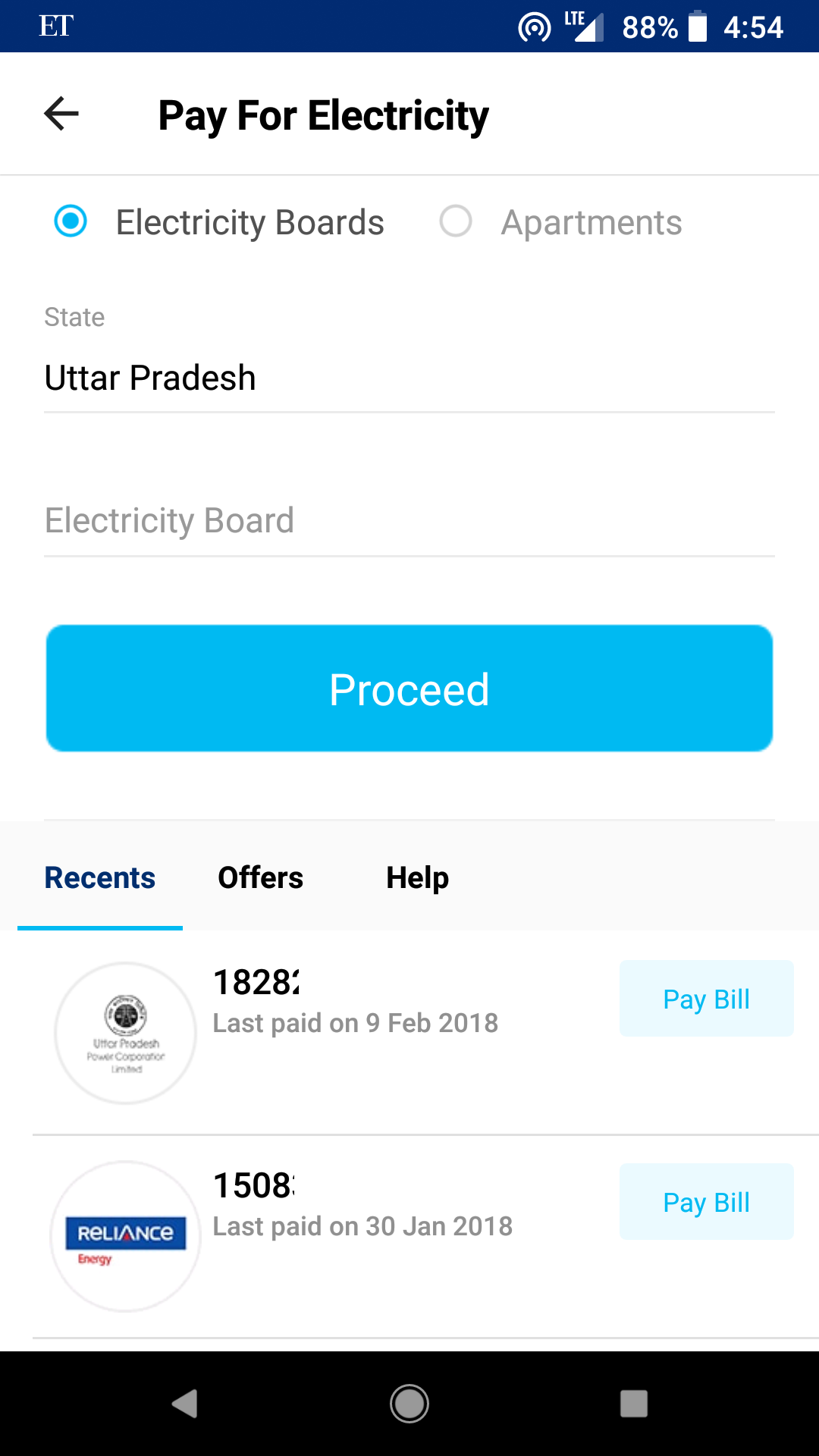
  • Why I use Paytm for all bill payments except Airtel

    Why I use Paytm for all bill payments except Airtel

    Consumer behavior used to be a course that marketing folks took in 2nd year of Bschool.

    I stayed away , like most other marketing courses.

    But over the years, time and again I have seen the importance of understanding the consumer behavior – why do consumers behave a specific way, why and how are habits formed, are all habits sticky, what would prompt a habit change and so on.

    My Online Bill Payments Behaviour

    Recently I just noticed something interesting about how I pay my bills. It brought up the importance of consumer behavior yet again.

    So here’s what happened.

    Every month I end up paying some 5-6 different mobile/landline and a couple of DTH bills.

    A few years back I started paying the Airtel bills online – the process was easy and it was the same interface for all Airtel Payments – mobile or landline.

    Just one drawback – there was no “Make another transaction” button.

    One had to go back to home page, and start the flow again. I shared this with my friends at Airtel Money and quite a coincidence that this button was added on their web page (they confirmed that my raising it with them had nothing to do with the feature going live).

    Since then its been how I have paid all my Airtel bills.

    PayTm bill payment
    On the other hand, my experience with TATA Sky’s online payment was horrible to say the least.

    During one such failed attempt, I remembered about Paytm and decided to use it.

    And boy was it an amazingly designed service.

    • The UI was really neat and intuitive.
    • Credit Cards were masked and stored for easy subsequent payments. One just needs to repunch the CVV and the Verified by VISA passwords.
    • Old payments were stored and it was super easy to bring up an old payment and make a fresh one against the same DTH/mobile account.
    • In case of a failed payment to the service provider, the amount is kept in a Paytm virtual wallet that is “automatically”(this is true customer delight) picked up first during any subsequent payments and only the delta amount is required to be paid by the card.

    Needless to say my bill payments have migrated to Paytm .

    But not all.

    I suddenly realized that my de-facto reaction when making the Airtel payments was still to go to the Airtel website and not PayTm. This was strange because from a rational perspective I had no reason to not switch my Airtel payments also to PayTm.

    And this got me wondering.

    • I am not really loyal to the Airtel website, its just a question of habit I guess. Its not a strong habit to the extent that one can explain it through muscle memory. But the reality is that I followed the above steps without thinking much – picked up the bill, went to the Airtel site, paid and got it done with.
    • Is my behavior sticky with Airtel because they managed to get to me first and delivered a decent experience? If yes, then the first-mover-advantage for consumer services should be the possible stickiness-hurdle it creates for new entrants.
    • Has PayTm got me as a dedicated customer for their wallet services? Would I choose to pay at lets say Myntra (flipkart has its own wallet and Snapdeal is working on one) through a PayTm wallet? I am not too sure.
    • Although I am an avid Android user with a lot of apps that I use regularly but I still don’t have the PayTm app on my phone. Why? I am not sure. But I remember seeing their messages online and have seen their app in the Google Playstore also. Again no logic to explain this behavior. Wouldn’t the guy in charge of Data Analytics at PayTm be looking at my profile and thinking this guy probably doesn’t have a smartphone or a 3G connection.
    • Now that I have spent some time thinking about my strange behavior, would I go back to the Airtel site or migrate to PayTm? What do you think?

    UPDATE

    I have long since downloaded the PayTm app and it is now the default way to make ALL bill payments including the Airtel one(s). I no longer wait (or bother) for the bill to be delivered – PayTm manages my bill presentment and payment experience end to end.

  • Are commission based channels low on trust

    In US car salesmen are amongst the least trusted professionals. On digging deeper one finds that they share these low rankings with advertising professionals, stockbrokers, insurance salesmen and surprisingly politicans too (Members of Congress, Senators and Governors). Have a look at the Gallup report summary below:

    Gallup Sruvey Trusted Professionals

    While there must be multiple reasons for people to trust certain professions and mis-trust few others, I am sure that the commission structure in a specific industry does lead to a low levels of trust.

    My guess is that if consumers know that the middleman involved in the transaction could be motivated by goals that clash with theirs, they try and look at each conversation from the point of no trust.

    Take for example, an online advertising agency which typically charges you 15% of what you spend on ad-networks. I remember, doing a detailed review with my agency and discovering that they were far away from optimization basis the Click-thrus and bid-rates. My first reaction was that this team is knowingly trying to jack-up the media spends and hence their cuts. It was some 3 hours later that I realized that they were not competent enough to make sense of the numbers and reports that the ad networks shared. Their intentions were ok !

    Cars, stocks and insurance policies are all complex products with multiple features and specifications. This means that there is no single correct recommendation for any given customer. 

    When the customer seeks the agent to play an advisory role (whether implicitly or explicitly) and the agent himself is paid the sales commissions, the mind starts playing scenarios. And in most of these scenarios, agent has either shortchanged or duped the customer.

     Look at the top spectrum of Gallup’s survey results. Doctors, Nurses, Engineers are all selling a service rather than a product. A doctor might give us any medicine but we feel its our symptoms/ailment that got cured. Doctor is not in the business of selling medicines but of curing.

    And here’s an opportunity for the Financial Services industry – can we find a way to be percieved as selling services rather than pushing products and eating commissions.